
Spring & Autumn Duvets
Most people sleep uncomfortably during spring and autumn not because of the season — but because they’re using the wrong duvet weight.
A seasonal duvet is light enough to prevent overheating on mild
nights, warm enough for the occasional cold snap. The right fill material matters too: natural fibres like cotton and bamboo breathe better than synthetic fills as temperatures fluctuate night to night.
Showing all 10 results
-
Dauny Geneva Down Light Duvet
Price range: 4704,00 ₾ through 5498,00 ₾ -
Dauny Zermatt Light Duvet
Price range: 3700,00 ₾ through 5410,00 ₾ -
Falkenreck Jade All Season Duvet
Price range: 2491,00 ₾ through 4344,00 ₾ -
Hefel KlimaControl Tencel/Cotton Duvet
Price range: 970,00 ₾ through 1130,00 ₾ -
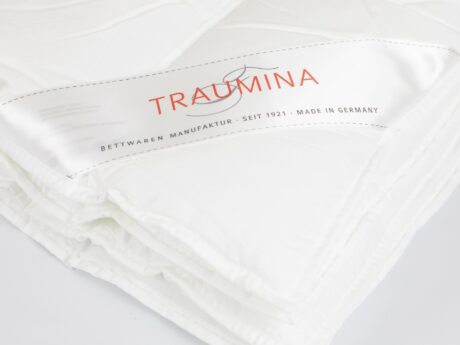
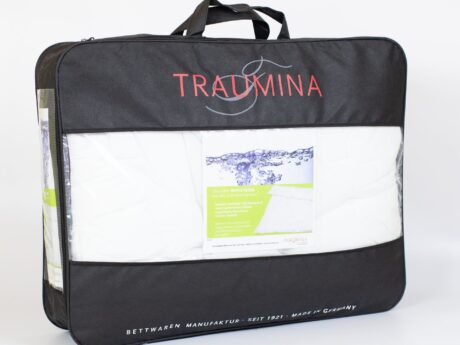
Traumina Exclusive Bambus Duvet WK2
Price range: 863,00 ₾ through 1558,00 ₾ -
Traumina Novis Faser Duvet WK 2
Price range: 1637,00 ₾ through 1921,00 ₾
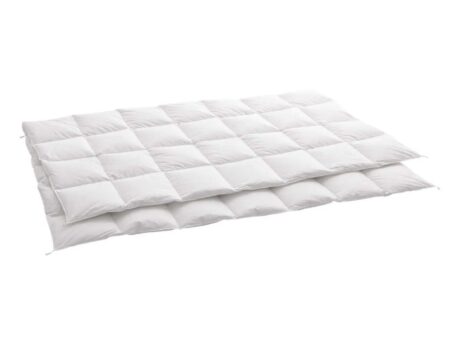

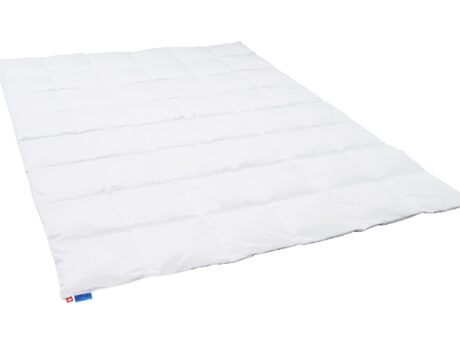
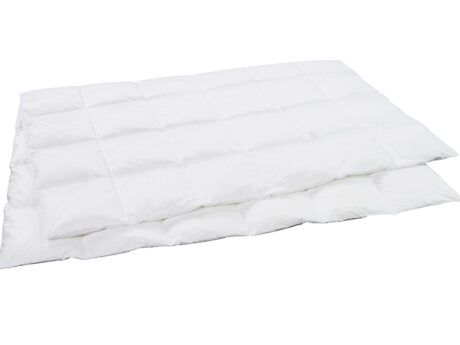
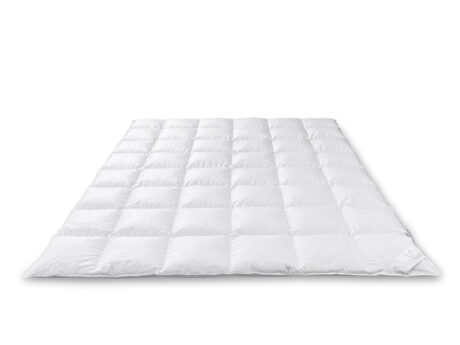



The Hardest Season to Get Right
Summer and winter are straightforward. Summer is hot; you need very little insulation. Winter is cold; you need as much as you can get. Spring and autumn are neither, and that ambiguity is precisely what makes them the most demanding season for bedding. A night that starts at 18°C can drop to 10°C by 4am. A week of unseasonable warmth follows a week of cold rain. The duvet that felt right on Monday is too heavy by Thursday.
A good transitional-season duvet handles this variability without requiring you to swap it out. The fills in this category — camel hair, plant-based fibres, synthetic fibre, and premium goose down — each address the problem differently, but they share one common property: they respond dynamically to changing conditions rather than insulating at a fixed level. The result is a duvet that stays comfortable across a wider temperature range than the warmth rating alone suggests.
This category brings together four brands: Traumina, Falkenreck, Dauny, and Hefel. Between them, they cover every fill type and comfort preference at the premium end of the transitional-season market.
Traumina: Three Approaches to the Same Season
Traumina contributes three distinct duvets to this category, each using a different fill — which reflects the range of what the German manufacturer produces across its natural hair, natural fibre, and synthetic fibre lines.
The N1 Luxury Camel Hair Duvet WK2 uses the same rare Mongolian highland camel hair as the heavier WK3 model, at a lighter fill weight suited to the transitional season. At WK2, it is designed for warm rooms and variable temperatures — the camel hair’s natural hollow fibre structure absorbs up to 30% of its weight in moisture without feeling damp, then releases it efficiently. For sleepers who run warm but find pure plant-based or synthetic fills too neutral in feel, camel hair at WK2 offers a distinctive combination of lightness and active climate control.
The Exclusive Bambus Duvet WK2 uses a bamboo fill with a premium cotton cover. Bamboo is naturally breathable and temperature-regulating, making it well suited to the unpredictability of transitional nights. It is also hypoallergenic, which means it appears in the Hypoallergenic Duvets range as well. The WK2 rating positions it for warm-to-mild conditions.
The Novis Faser Duvet WK2 takes a technical approach. The fill is TRANCO® 3000 — Traumina’s high-performance functional fibre, made from biodegradable beech cellulose. It delivers fast moisture transport and strong breathability in a washable, low-maintenance package. The cover is an 80% Micro-Modal / 20% cotton noble batiste — soft, breathable, and quick-drying. It is an excellent choice for those who prioritise easy care without sacrificing sleep comfort, and it is washable at 60°C.
See the full Traumina range on the Traumina brand page.
Falkenreck and Dauny: Down at Transitional Weight
Two of the down duvets carry warmth ratings suited to transitional conditions, which is why they appear here as well as in the Down Duvets category.
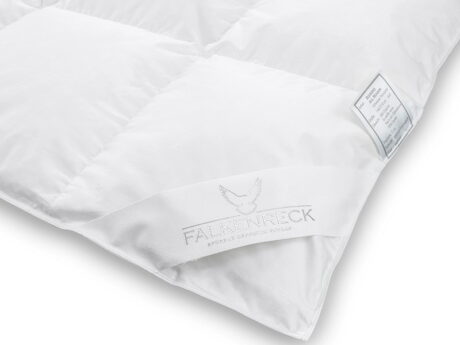
The Falkenreck Diamond Light — 100% Newfoundland goose down at 850 cuin, handmade in Germany — carries a warmth rating of 1 of 4. At this fill weight, it works as a spring and autumn duvet for those who sleep warm, or as a summer duvet for sleepers who prefer the feel of down regardless of the season. Its exceptional fill power means it provides real insulation despite its low weight.
The Dauny Geneva Down Light — made in Switzerland with 100% pure European Class I goose down in a fully quilted caros construction — sits at a similar warmth level. It functions as a light all-year duvet for those who need little warmth, and as a transitional duvet for average sleepers. The Swiss Batiste cover manages moisture and airflow efficiently, which is what makes it work across a broader seasonal range than its rating implies.
Hefel: TENCEL™ for Variable Nights
Hefel contributes two KlimaControl duvets — the Tencel Duvet and the Tencel/Cotton Duvet — both built around TENCEL™ lyocell fibre. TENCEL™’s moisture management properties make it particularly well suited to transitional conditions: it wicks perspiration away from the body rapidly, keeping the sleep surface dry even when body temperature fluctuates during the night. The pure TENCEL™ model maximises this effect; the blended version adds a softer cotton hand feel for those who prefer a more familiar texture. Both are hypoallergenic and carry warmth ratings appropriate for spring and autumn use.
The full Hefel range is available on the Hefel brand page.
When a Spring/Autumn Duvet Becomes a Summer Duvet
Seasonal warmth labels are a guide, not a fixed rule. What determines whether a duvet feels right is the temperature of the room you sleep in, not the calendar date. Several duvets in this category work comfortably as summer options for sleepers in air-conditioned bedrooms — where room temperature is consistently lower than it would be with windows open.
Specifically: the Hefel KlimaControl duvets, the Dauny Geneva Down Light, and the lighter version of Traumina Exclusive Bambus WK2 – Exclusive Bambus WK1 (available in our Summer Duvets category), all suit cool summer conditions.
For a full overview of the duvet range across all fills and warmth ratings, visit our main duvets category.
Frequently Asked Questions
How do I know if I need a spring/autumn duvet or a summer duvet?
The most reliable guide is the temperature of your bedroom at night, not the season. If you sleep with windows open in spring or autumn and your room drops to around 14–18°C overnight, a WK2 duvet will suit you well. If you sleep in a climate-controlled room where temperature stays closer to 20–22°C year-round, a lighter WK1 duvet or one of the lower-rated options in this range may be more comfortable. When in doubt, a fill with strong moisture management — camel hair, TENCEL™, or bamboo — will handle more variability than a fixed-weight synthetic.
Can I use a spring/autumn duvet in winter if I layer it?
Yes, layering is a practical solution. A WK2 duvet combined with a lightweight blanket or throw provides noticeably more warmth than either alone. If you want a more integrated approach, the Dauny Geneva 4 Season duvet — available in our Down Duvets category — is engineered specifically as a two-duvet system that buttons together for winter use and separates for lighter conditions.
Which fill in this category is best for someone who sweats during sleep?
Camel hair and TENCEL™ are the strongest performers for sweaty sleepers. Camel hair can absorb around 30% of its weight in moisture without feeling damp, then releases it efficiently as conditions change. TENCEL™ lyocell wicks moisture away from the body faster than most natural or synthetic fibres. The Traumina Novis Faser is also a strong option — its TRANCO® functional fibre was developed specifically for high moisture-transport performance, and the duvet is washable at 60°C for easy hygiene maintenance.
Why are natural-fill transitional duvets more expensive than synthetic alternatives?
Camel hair, bamboo fibre, TENCEL™ lyocell, and premium goose down all cost significantly more to source and process than standard polyester. The manufacturers in this category — Traumina, Falkenreck, Dauny, and Hefel — also apply strict quality standards to fabric, construction, and fill selection that add to the production cost. The practical difference shows up over time: a well-made natural-fill duvet maintains its loft and thermoregulatory properties for many years, while a lower-cost synthetic equivalent typically flattens and loses function within two to three seasons.